

Pursuit of better economic opportunities drives the people to move to major urban centers, which in the context of our country is a major cause of rapid urbanization.
Provision of basic urban services at a slower pace to match the needs of migrating population results in unplanned and unchecked expansion of the city characterized by haphazard land use, overcrowding, traffic congestion, unemployment, crime, urban slums, poor environmental conditions, over stressed existing infrastructure and deteriorating urban life with no regard for urban heritage conservation, present and future requirement of urban living.
The presence of such a situation in city localities is a sign of urban decay which inhibits the city’s economic growth through weakened capacity to attract trade, investment and other opportunities of economic growth.
Urban Renewal provides the tool that addresses the complex problem of urban decay through redevelopment and utilizing urban spaces innovative & efficiently with a future vision for the enhancement of people’s quality of life.
Our approach is based on realistically appraising the existing physical and socio-economic situation clearly identifying factors causing decline and impediments in the city’s growth, developing pragmatic strategies based on future vision, innovative utilization of urban spaces and potential economic opportunities through consensus building among stakeholders to bring a sustainable positive change in city’s quality of life.
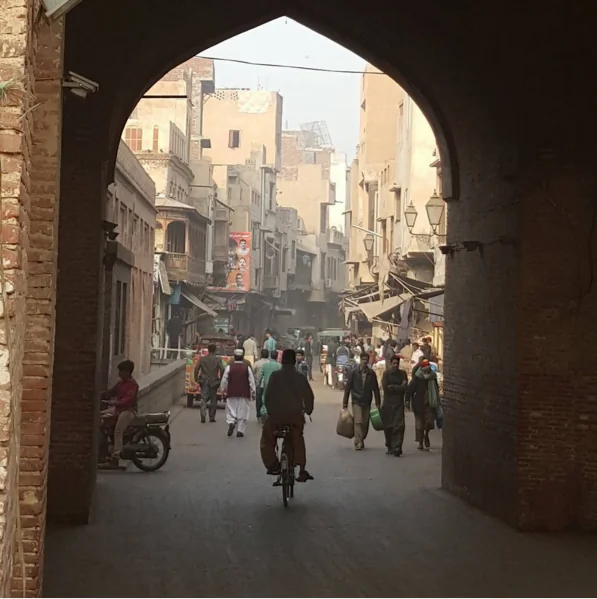
The pursuit of better economic opportunities continues to drive migration to Pakistan's major urban centres, a principal driver of rapid urbanisation. Where basic urban services expand more slowly than the migrating population, the result is unplanned growth, overcrowding and deteriorating quality of life. Eminence One Consultants develops urban regeneration strategies that address these conditions directly.
Unplanned expansion often produces haphazard land use, traffic congestion, urban slums, poor environmental conditions and infrastructure stretched well beyond its designed capacity, with little regard for heritage conservation or the present and future needs of urban residents. This pattern of urban decay weakens a city's capacity to attract trade, investment and other opportunities for economic growth.
We realistically appraise the existing physical and socio-economic situation in a given area, clearly identifying the factors causing decline and the impediments to the city's continued growth.
We develop pragmatic strategies grounded in a future vision for the area, focused on innovative use of urban spaces and identification of potential economic opportunities, built through consensus among the stakeholders who will ultimately have to live with and sustain the outcome.
Urban renewal is the tool we use to address the complex problem of urban decay, redeveloping and reusing urban spaces more innovatively and efficiently with a clear vision for improving residents' quality of life. Stakeholder consensus building is central to this process, since regeneration imposed without local buy-in rarely produces a sustainable positive change.
We support municipal and development authorities, urban planning bodies and stakeholders seeking to reverse urban decay and reposition a district or city for sustainable growth.
Successful regeneration improves quality of life for existing residents, strengthens a city's ability to attract trade and investment, and makes more efficient use of urban land and infrastructure that would otherwise continue to decline. It can also help preserve areas of heritage value that might otherwise be lost to unplanned redevelopment.
Lahore's older quarters and rapidly expanding peripheries both show signs of the strain that comes with fast urban growth, from overstressed infrastructure to areas of visible urban decay. Addressing this constructively, while respecting the city's heritage and existing communities, is central to how we approach urban regeneration work in Pakistan.
We build regeneration strategies on a realistic appraisal of what is actually happening on the ground, and on consensus among the people and institutions who must sustain any change after it is made, rather than proposing plans that look compelling on paper but lack the local support needed to succeed.
Get in touch for a consultation tailored to your organisation's requirements.
Request a ConsultationThe terms are closely related and often used interchangeably to describe redeveloping and reusing urban spaces more effectively to reverse decline and improve quality of life; our approach treats them as the same underlying discipline.
Urban decay typically results from basic services and infrastructure expanding more slowly than a migrating population, producing unplanned growth, overcrowding and deteriorating environmental conditions.
We carry out a realistic appraisal of the existing physical and socio-economic situation, identifying the specific factors causing decline and the barriers to continued growth in that area.
Not necessarily. Regeneration often focuses on more innovative and efficient use of existing urban spaces rather than wholesale redevelopment, depending on what the area's condition actually requires.
Regeneration strategies developed without buy-in from local stakeholders are less likely to be sustained after implementation, so building consensus is a core part of our planning process.
Yes. Reversing urban decay can strengthen a city's capacity to attract trade, investment and further economic opportunity by improving the physical and environmental conditions that businesses and residents consider.
Yes, our approach considers present and future requirements of urban living alongside due regard for the conservation of urban heritage in the affected area.
Municipal and development authorities, along with urban planning bodies, are the typical clients for urban regeneration and renewal strategy work.