

Resource recovery is using wastes as an input material to create valuable products as new outputs. The aim is to reduce the amount of waste generated, thereby reducing the need for landfill space, and optimizing the values created from waste.[1] Resource recovery delays the need to use raw materials in the manufacturing process. Materials found in municipal solid waste, construction and demolition waste, commercial waste and industrial wastes can be used to recover resources for the manufacturing of new materials and products. Plastic, paper, aluminum, glass and metal are examples of where value can be found in waste.
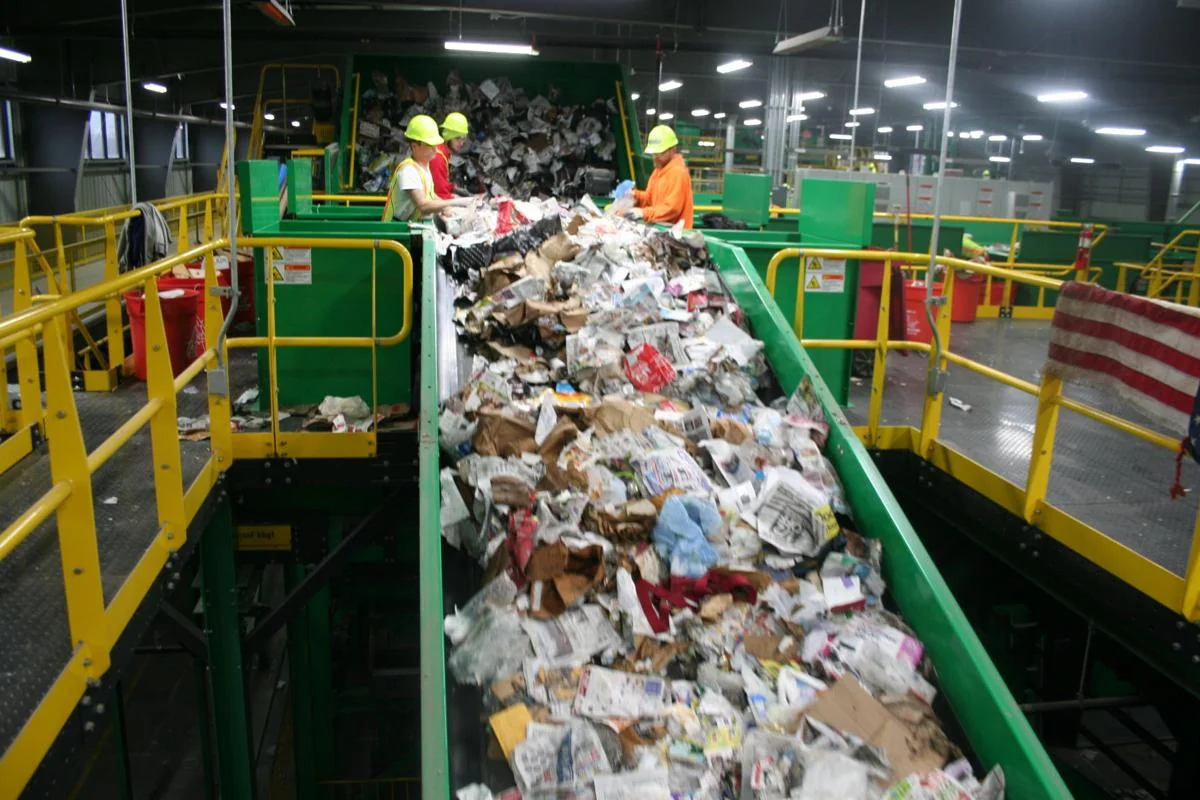
Resource recovery goes further than just the management of waste. Resource recovery is part of a circular economy, in which the extraction of natural resources and generation of wastes are minimized, and in which materials and products are designed more sustainably for durability, reuse, repairability, remanufacturing and recycling.[2] Life-cycle analysis (LCA) can be used to compare the resource recovery potential of different treatment technologies. Resource recovery can be enabled by changes in government policy and regulation, circular economy infrastructure such as improved ‘b infrastructure’ to promote source separation and waste collection, reuse and recycling, innovative circular business models and valuing materials and products in terms of their economic but also their social and environmental costs and benefits.[5] For example, organic materials can be treated by composting and anaerobic digestion and turned into energy, compost or fertilizer.[6] Similarly, wastes currently stored in industrial landfills and around old mines can be treated with bio leaching [7] and engineered nanoparticles[8] to recover metals such as Lithium, Cobalt and Vanadium for use in low-carbon technologies such as electric vehicles and wind turbines.
Resource recovery can also be an aim in the context of sanitation. Here, the term refers to approaches to recover the resources that are contained in wastewater and human excreta (urine and feces). The term “toilet resources” has come into use recently.[10] Those resources include: nutrients (nitrogen and phosphorus), organic matter, energy and water. This concept is also referred to as ecological sanitation. Separation of waste flows can help make resource recovery simpler. Examples include keeping urine separate from feces (as in urine diversion toilets) and keeping gray water and blackwater separate in municipal wastewater systems.
Resource recovery uses waste as an input material to create valuable products, reducing the volume that must be sent to landfill while optimising the value that can be extracted from materials already in circulation. Eminence One Consultants designs resource recovery and recycling systems that fit within a client's operational and budgetary realities rather than requiring imported infrastructure and specialist expertise.
Materials found in municipal solid waste, construction and demolition waste, commercial waste and industrial waste streams are frequently sent to landfill without recovery, even where plastic, paper, metal and glass content could be reclaimed for further use. Without a structured approach to segregation and recovery, valuable materials are lost and landfill capacity is consumed faster than necessary.
We design systems for sorting and recovering plastic, paper, metal and glass from mixed waste streams, aiming to recover material of a quality that can genuinely be reused or sold into recycling markets.
Organic material can be treated through composting or anaerobic digestion and converted into compost, fertiliser or energy, and we design recovery systems that make this a practical part of a client's overall waste management approach.
Resource recovery works best as part of a circular economy approach, where the extraction of new raw materials and the generation of waste are both minimised. We design systems around locally achievable segregation and collection infrastructure, since a recovery system that depends on levels of source separation the local population cannot sustain will underperform regardless of how well it is engineered on paper.
We work with municipal waste authorities, industrial estates and private waste management operators seeking to recover value from municipal solid waste, construction and demolition waste, and industrial by-products.
Recovering materials from waste extends landfill life, reduces the cost of raw material procurement where recovered inputs can substitute for virgin material, and creates local economic opportunity through collection, sorting and processing activity. It also reduces the environmental footprint associated with extracting new raw materials.
A significant proportion of recoverable material in Pakistani cities currently ends up in landfill without segregation. Improving recovery rates in Lahore and other urban centres offers a genuine opportunity to extend landfill life, reduce environmental pressure and create economic value from materials that would otherwise be discarded.
We design recovery and recycling systems around what a given community or client can realistically segregate, collect and process, rather than proposing infrastructure that looks impressive on paper but cannot be sustained in practice.
Get in touch for a consultation tailored to your organisation's requirements.
Request a ConsultationPlastic, paper, metal, glass and organic material are the most commonly recoverable components of municipal and commercial waste streams, provided suitable segregation and sorting infrastructure is in place.
By diverting recoverable material away from disposal, resource recovery reduces the volume of waste that reaches landfill, extending its usable life and reducing the associated environmental impact.
A circular economy aims to minimise the extraction of new raw materials and the generation of waste by keeping materials and products in use for as long as possible through reuse, repair and recycling.
Yes, organic waste can be composted or treated through anaerobic digestion to produce compost, fertiliser or energy, rather than being sent to landfill.
Segregation at source significantly improves recovery quality and rates, so we design systems around the level of segregation that can realistically be achieved locally.
Recovered material quality depends heavily on how well it is sorted and how contaminated it is with other waste, which is why source segregation and proper sorting infrastructure matter.
Yes, industrial by-products and construction or demolition waste often contain recoverable metal, plastic or aggregate material suitable for reuse or recycling.
Costs vary with scale and technology; we design systems matched to what a client can realistically fund and operate, rather than defaulting to the most capital-intensive option.